 |
|---|
|
|
Bloody Sunday 1972
Wikipedia
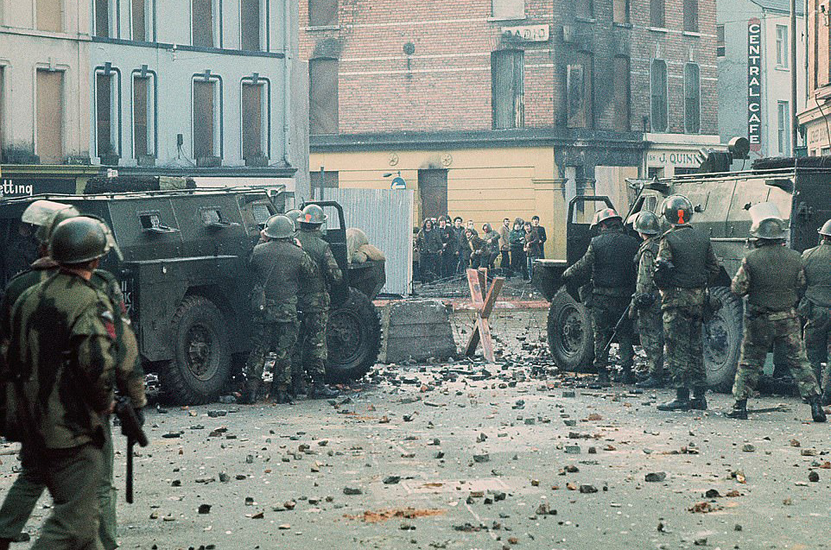
Bloody Sunday, or the Bogside Massacre, occurred on 30 January 1972 when British soldiers shot 26 unarmed civilians during a protest march in the Bogside area of Derry, Northern Ireland. Thirteen men were killed outright, while the death of another man four months later has been attributed to his gunshot injuries. Many of the victims were shot while fleeing from the soldiers and some were shot while trying to help the wounded. All of those shot were Catholics. The march had been organized by the Northern Ireland Civil Rights Association (NICRA) to protest against internment without trial. The soldiers were from the 1st Battalion of the Parachute Regiment ("1 Para"), the same battalion implicated in the Ballymurphy massacre several months earlier.
The incident became one of the most significant events of the Troubles. It was the highest number of people killed in a single shooting during the conflict and is regarded as the worst mass shooting in Northern Irish history. Bloody Sunday fueled Catholic and Irish nationalist hostility towards the British Army, intensified the conflict and led to a surge of support for the Provisional Irish Republican Army (IRA), especially in Derry. The Republic of Ireland held a national day of mourning and crowds besieged and burnt down the chancery of the British Embassy in Dublin.
Two investigations were held by the Government of the United Kingdom. The Widgery Tribunal, conducted shortly after the event, largely accepted the soldiers' accounts and was widely criticized as a whitewash. In 1998, the Saville Inquiry was established to reinvestigate the killings. Its 2010 report concluded that the shootings were "unjustified" and "unjustifiable", that none of those shot posed a threat and that soldiers had given false accounts to justify their actions. British prime minister David Cameron formally apologized on behalf of the United Kingdom.